Peptide stability studies help researchers determine whether a material remains chemically and physically consistent during storage, sample preparation, and analysis. A useful study does more than record a purity value at the beginning and end. It defines the experimental question, controls the variables that can change a peptide, and uses analytical methods capable of separating genuine degradation from handling artifacts.
This guide outlines a practical framework for planning peptide stability and forced-degradation experiments in a research setting. It is not a product-specific protocol: the sequence, formulation, concentration, container, and analytical platform should determine the final design.
Start with a clear stability question
“Is the peptide stable?” is too broad to answer with one experiment. Stability can refer to the unopened lyophilized material, a prepared stock solution, a diluted working sample, or a sample waiting in an autosampler. Each state has different risks. Before selecting conditions, define the material state, matrix, container, target concentration, expected handling time, and analytical decision that the data must support.
A study intended to compare storage temperatures is different from one investigating whether sample preparation creates oxidation or deamidation. Likewise, an in-use study covering repeated transfers should consider surface loss as well as chemical change. Our guide to peptide adsorption to labware explains why declining recovery does not automatically prove molecular degradation.
Map sequence-related vulnerabilities
The amino-acid sequence provides an initial risk map. Methionine, cysteine, tryptophan, tyrosine, and histidine can be relevant to oxidative change under particular conditions. Asparagine and glutamine may undergo deamidation, while aspartic-acid-containing regions can show sequence-dependent hydrolysis or isomerization. Disulfide-containing peptides may also require monitoring for reduction, scrambling, or related structural changes.
These are possibilities, not predictions. The local sequence, pH, dissolved oxygen, light, trace metals, temperature, and formulation all influence what is observed. Terminal modifications and counterions can matter too. Researchers should therefore begin with the complete molecular description, as discussed in our guide to reading peptide sequences and modifications.
Build a controlled stress matrix
Forced-degradation studies deliberately expose a peptide to selected stresses so that likely degradation pathways can be detected and the analytical method can be challenged. Common categories include heat, light, oxidation, acidic or basic conditions, agitation, and time in solution. The goal is not maximum destruction. Excessive stress can produce a complex mixture with little relevance to normal handling and can make interpretation harder.
A stronger design changes one major variable at a time and includes an unstressed control prepared from the same material. Record the exact buffer composition, pH measurement method, concentration, container material, headspace, light exposure, temperature history, and sampling time. If several factors must be combined, use a predefined design and enough replicates to distinguish an interaction from ordinary analytical variation.
The ICH quality guidelines provide established principles for stability study design and analytical validation in regulated development. Research laboratories can use those principles—defined conditions, representative samples, stability-indicating methods, and documented acceptance criteria—without implying that a small exploratory study is a formal regulatory stability program.
Choose stability-indicating measurements
No single measurement describes every form of instability. Reversed-phase HPLC or UHPLC can show loss of the main peak and formation of new components, but a chromatographic area percentage should not be treated as a complete identity assessment. Mass spectrometry can help associate new peaks with mass changes consistent with oxidation, hydrolysis, adduct formation, or other transformations. The two techniques answer complementary questions; see our overview of HPLC and mass spectrometry in peptide quality documentation.
Depending on the peptide and study purpose, researchers may also need a mass-balance or total-recovery measurement, visual inspection, pH, particle assessment, size-based separation, spectroscopy, or a functional research assay. A functional signal alone is insufficient because activity may change without revealing the chemical cause, while a clean chromatogram may miss insoluble material that never reached the detector.
Separate degradation from analytical artifacts
Sample preparation can create the very changes a study is trying to measure. Long autosampler residence, repeated freeze-thaw cycles, harsh pH adjustment, reactive impurities, light exposure, and prolonged contact with surfaces can alter recovery or generate artifacts. A blank, preparation control, system-suitability sample, and time-zero sample help reveal where the change occurs.
Analytical procedures should be fit for purpose and capable of resolving the parent peptide from relevant products. The FDA’s final Q14 analytical procedure development guidance emphasizes science- and risk-based method development. For peptide work, practical questions include whether the method maintains solubility, whether degraded and undegraded forms have different recoveries, and whether carryover distorts low-level peaks.
Interpret trends, not isolated numbers
Plot the main-peptide response, individual degradation products, and total recovery over time. A gradual decline with corresponding product growth is more informative than a single out-of-specification result. If the parent signal falls without new peaks or mass balance, investigate precipitation, adsorption, incomplete transfer, detector response, and integration settings before assigning chemical degradation.
Replicates and acceptance criteria should be defined before the data are reviewed. Criteria can include limits for main-component change, individual degradants, total recovery, or method precision, but they must be justified for the research objective. Avoid transferring specifications from unrelated peptides: sequence, length, formulation, and analytical response can differ substantially.
Document enough detail to reproduce the study
A complete record should identify the batch, molecular form, initial characterization, preparation date, operator, equipment, reagents, containers, storage locations, sampling plan, deviations, raw-data files, and processing method. Preserve both successful and unexpected observations. Unexpected precipitation, color change, pressure loss, or inconsistent recovery may be scientifically important even when it does not fit the original hypothesis.
Pair the stability record with the supplier documentation and the analytical controls used in the laboratory. Our guide to reference standards and controls describes how blanks, calibration materials, and quality controls support reproducible interpretation.
A practical planning checklist
- Define the material state and the specific stability question.
- Review the sequence, modifications, counterion, and formulation.
- Select relevant stresses and an unstressed control.
- Record concentration, pH, container, light, temperature, and time.
- Use orthogonal measurements where one method cannot answer every question.
- Track parent peptide, degradation products, and total recovery.
- Check for adsorption, precipitation, carryover, and preparation artifacts.
- Predefine replicates, acceptance criteria, and data-processing rules.
- Retain raw data and document deviations.
Conclusion
A meaningful peptide stability study connects a defined question to controlled stresses, suitable analytical measurements, and transparent documentation. The strongest conclusions come from converging evidence: chromatographic change, mass information, recovery, physical observations, and appropriate controls. This approach helps researchers distinguish true degradation from sample loss or analytical bias and supports more reproducible laboratory workflows.
For research purposes only. Not for human consumption.
Selected scientific resources
- ICH Q1A(R2): Stability Testing of New Drug Substances and Products.
- FDA/ICH Q14: Analytical Procedure Development.
- Reubsaet et al. Analytical techniques used to study the degradation of proteins and peptides: chemical instability.
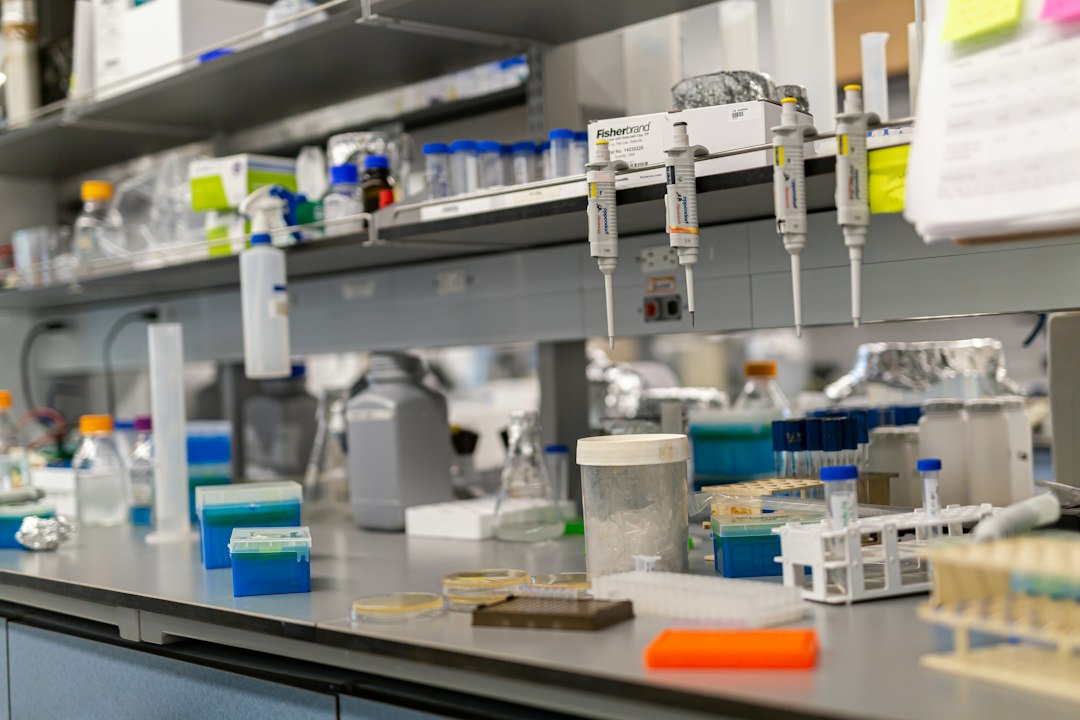
Featured photo by Adam Bezer on Unsplash.
[…] method, careful aliquoting, and complete records. For related background, review our guide to designing peptide stability studies, along with our resources on solubility, storage, COA review, and research peptide […]